


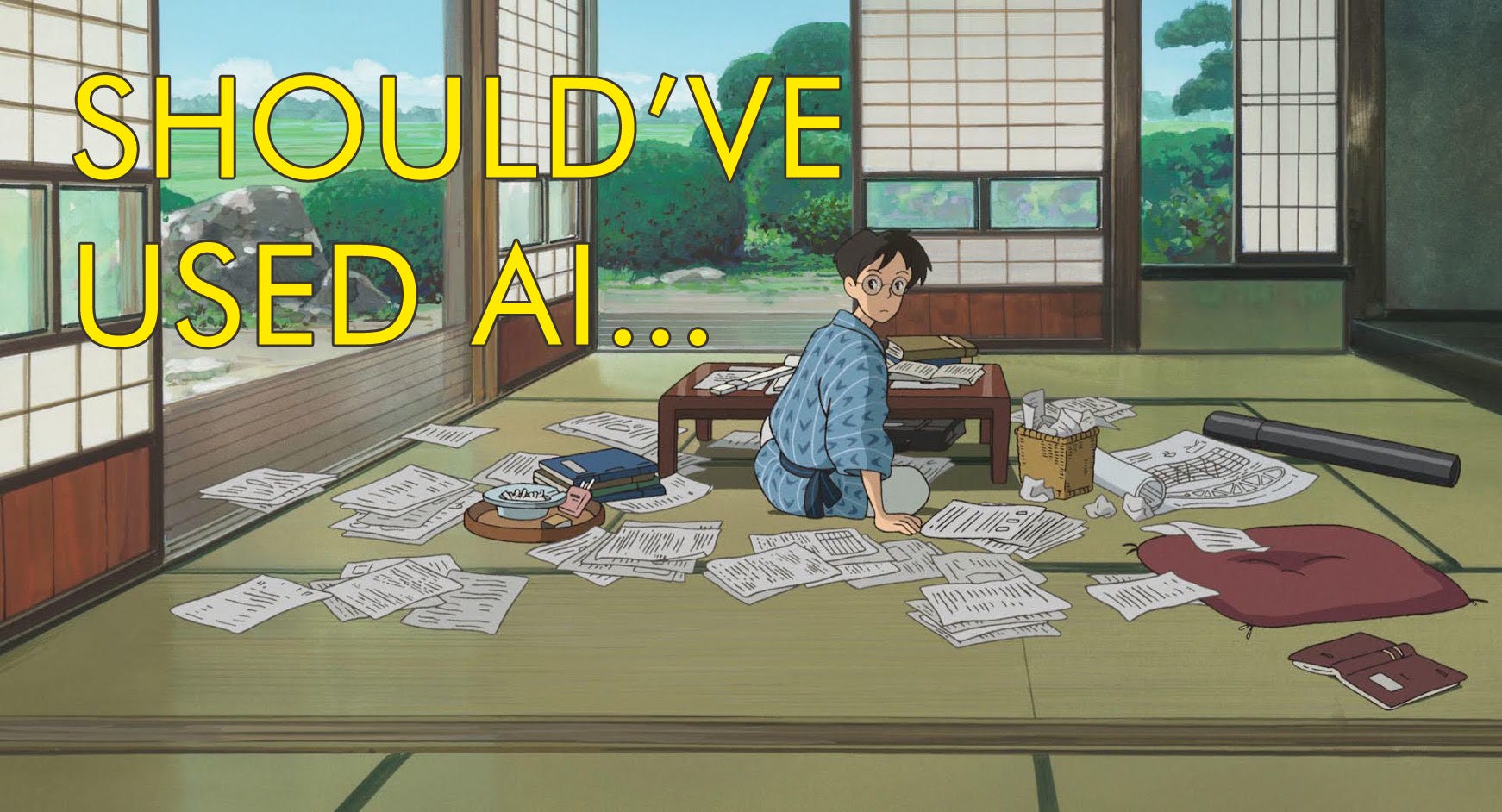
Anthropic have announced that they will start watermarking Claude’s text outputs. Here’s an explanation of how it apparently works. The text outputs will now contain a semantic pattern that is undetectable to readers — but very detectable to whoever has the key. Never mind what the key is and how you get it. The important thing to focus on is this paragraph (emphasis is mine):
Take the sentence “The weather today was cold and…”. The next word is very unlikely to be “sugary.” But it is quite likely to be “overcast” or “grey.” Under most circumstances, it doesn’t matter much to the reader which of these latter two words the model ultimately chooses—the meaning of the sentence is largely the same either way. In cases like this, the choice is settled by a random number.
This perfectly encapsulates how AI companies — and avid users of AI for ‘creative’ purposes — hold deep in their empty hearts a casual disdain for art. It DOES matter whether or not you use ‘grey’ or ‘overcast’ if you’re someone who enjoys the challenge of writing well. If you don’t care and you’re just using AI, of course it doesn’t matter; you’re not writing it, so you don’t have to do the work necessary to make a creative choice. An actual writer will be thinking about visuals. How does ‘grey’ feel different to ‘overcast’? It all depends on what story you’re trying to tell. So in the grand scheme of reading and writing creative works, of course it matters. But what Anthropic et al are saying, perhaps without even meaning to because they think so little about art, is this: writing is a waste of time; commodifying it isn’t.
And you can commodify it on every conceivable dimension. You can ingest it and spit it out with the words in a different order and call it new, at the press of a button. You can ask people to pay you for the privilege to press that button. Those people can then take the outputs and commodify those on the slop market, in whatever form they like. And we know that people are not using Claude just to write emails and Linkedin posts — in which case grey VS overcast genuinely doesn’t matter — they are using it to generate entire books. I’ve been lurking on subreddits to better understand why people hate writing so much, but still want to make money selling books, and my faith in humanity has now plummeted beyond bedrock, into the earth’s core, and beyond that, into the lava pits of hell itself. I haven’t been able to stop looking since coming across this post about “ChatGPT not letting you emulate specific authors any more”. The replies are either from those trying to help the OP figure out a work-around, or from those making fun of the OP for even admitting this in the first place. The moderators have shut down the thread now — it was getting too much attention from the outsiders who respect themselves, respect their readers, and respect other writers.
Even before the watermarking announcement, the slop merchants on these subreddits would tie themselves in knots trying to figure out if disclosing that a book was generated by AI makes sales better or worse. This user shared their stats, saying that they put their book on a free trial and got 53 downloads in two days. Most people stopped reading before they got to page two. I’m not 100% sure on what this is supposed to tell us other than 53 people were curious to see what an entire books-worth of AI-generated prose looked like for free. Another user rants about feeling the pressure to disclose. Another discovers that putting the disclosure on a book which was entirely AI-generated made more people hate it — weird, why would they hate something that you didn’t bother to write but you are asking to be paid for? And they share tips on how to make this profitable, with one person saying that they use a “self-built” system to produce books, and a lot of “trial and error”; so comforting to know that building the slop-generator is more fun and interesting than simply learning to write. This is the true downside to frictionless convenience products: they don’t just make deception easier, they transform deception into a craft; now people feel entitled to deceive.
The most interesting sentiment so far is “I won’t read your book if you didn’t use AI” where the OP says that AI in writing is so stigmatised that readers dismiss and demonise before taking the time to understand that machines are better than humans at writing. One replier says that they would never use AI to help them write actual sentences, even if it was faster. Another responds with “What if it wasnt just faster, but better?” and my response to this is it will never be faster or better with AI because that’s just not how it works. If you enjoyed writing, you’d just do it — you wouldn’t be trying to optimise it. Optimisation suggests that there are unacceptable defects, and surely the thing you love does not contain unacceptable defects. You cannot optimise it; you already love it. And it’s really okay to not love writing. It’s just not a big deal. It’s not for everyone. It’s okay to not be ‘a creative’ in general. No one will think less of you. Unless you keep using AI to pretend. We all have skills, you really don’t need to try and make money from AI-generated books, you just don’t. Later on in the thread someone else asks, “Why would I read someone else’s AI generated book if I can get an AI to generate one for me?” — which is a great question. Why not just use the infinite content machine to entertain yourself without bothering anyone else. But that’s not the goal here. As mentioned, the goal is deception.
The watermark announcement has made the entitled deceivers lose their minds. This person, barely clinging on to reality, characterises watermarking as a grand global injustice and/or conspiracy, and it’s quite a funny read. In fact it’s the only AI generated thing that I was happy to poison my eyes with this week. I’m not going to sit here and say that watermarks are good and I am glad that these sheisters are finally getting what they deserve. Watermarks are stupid, because this entire thing is stupid. The existence of the watermark is proof that the status quo is still holding strong: it’s a huge manic tech company doing the bare minimum to keep regulators off their backs. There are already a hundred free apps to bypass the watermark, which is pretty much irrelevant because all AI writing already comes with its own watermark by being unacceptably terrible. Meanwhile Amazon, like proper modern-day Nazis, are destroying books at scale so that they can train their models and tighten their grip on our already decaying information system.
The funniest thing about the watermark is this: a group of billionaire pirates got into a real flow-state and stole the world’s creative works without anyone’s knowledge — and then legitimised their piracy by calling themselves ‘AI companies’. Then they transformed that piracy into a consumer tool, so everyone could do their own legitimised piracy, for a competitive price. Now everyone can make their own pirated works, as much as they like. It’s the democratisation of piracy everybody! Skip to 2026 and the billionaire pirates are slapping a ‘this is stolen btw’ sticker on the outputs of their own tools — of course you’re gonna feel betrayed if you were maintaining a fifty-book-per-month side hustle. This isn’t your fault. You’re not an artist, you’re not a writer; you work in deception selling slop novels. Which is why this whole thing is so baffling, because even real writers barely make money from writing.