


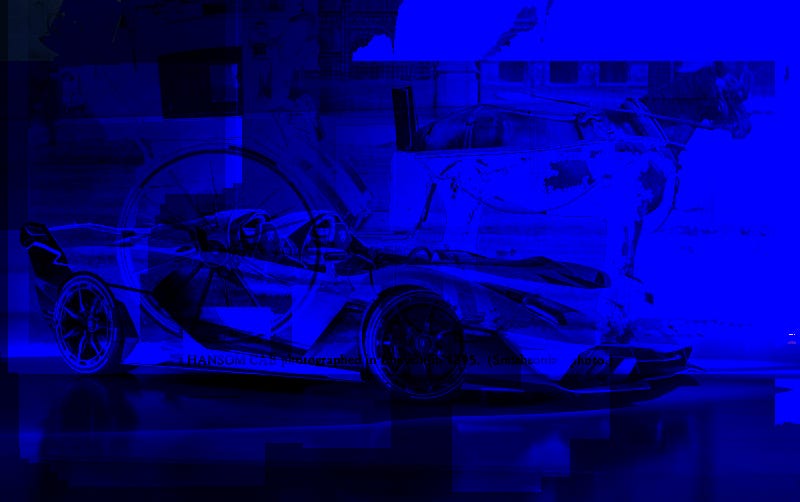
In Fully Automated Luxury Communism (2019), Aaron Bastani tries to teach us something about the future of innovation by talking about horse shit. He shares the ‘London Horse Manure Crisis of 1894’ as if it’s fact — but it’s a myth: it goes that at the end of the 19th century, the people of London were panicking about horse manure piling in the streets. The economic boon that was the industrial revolution meant that wise entrepreneurs were carting themselves all over the city to meetings about building factories, exploiting workers, and the glories of mass production. Despite all this innovative thinking these mugs were still travelling by horse, and horses shit everywhere. In his book, Bastani cites a non-existent Times article which predicted that London would be under 9ft of horse manure by the mid 1940s. Apparently Londoners back then were a very tedious people: after just a few decades of enjoying factory-made consumer goods, they’d forgotten how to engage in critical thought. The manure, clogging doorways, providing bedding for the homeless, seeping into every exposed gutter, was apparently an insurmountable problem that nobody could solve. Summits were held; political leaders were impotent in the face civil collapse (because of manure).
Except, there were great thinkers working on a solution in secret. The general public, politicians, and the panicked commentators at The Times were completely unaware of a new technology that was going to fix everything: the automobile. The manure-dissolver of the 20th century. So that was it — crisis over. This story is great if you’re trying to inspire your students at Harvard Business School to go and disrupt something. It’s also a very effective pacifier. It teaches us that in times of uncertainty, a secret unknowable technological solution is just around the corner, so just fucking relax with all your manure-based activism. Bastani invokes the horse manure myth (which again, he presents as fact) as a way of reassuring his readers that a solution for climate change is coming. All we have to do is wait.
This story also misses out all of the baggage that comes with a new technology: the unfulfilled promises, the unintended consequences, the endless troughs of money being poured into the incinerator. According to the horse manure myth, the car kind of just appeared one day and saved us all from drowning in actual poo. In all fairness the myth has some truth in it. Switching to cars obviously meant less horse shit. Cars also meant that you could roll up your windows and sequester yourself from the outside world while you drive to yet another indoor location. They made it so that taxi drivers could rot their brains with LBC all day. The car is a real thing that fundamentally changed our relationship to transport, and the way urban spaces operate, and I guess culture too. Cars are sexy. They allow men to bond. They allow a tyre company to tell us which restaurants are good. They allow creative directors to make outlandish ads with wild visuals, suave celebrities, sweeping landscapes — as long as there’s at least one shot of the car. But these days new technologies are the culture. AI is a mega-brand with hundreds of god-awful cultural outputs. But that’s all it is; there’s no actual product… it’s just all promises, lots of consequences, and somehow we are still drowning in shit (but we call it slop now). At least cars are actually real.
Unfortunately, cars are also horrible destructive machines that shouldn’t exist. I can’t think of a more capitalist idea than a motorised metal isolation pod perfectly sized to fit one nuclear family. The car is what Systemantics author John Gall would refer to as a colossal system with a colossal problem — and colossal problems are practically invisible. We transformed the transport system into one that was much more fatal, and much worse for the environment, and decided that it was a good thing somehow:
Thus, the loss of 50,000 American lives per year in auto accidents is seen, not as a mortal flaw in our Transportation System, but merely as a fact of life. The dismantling of the American street railway system and its replacement by privately owned automobiles, at a thousand-fold increase in traffic density and energy consumption, has hardly been noticed. Some, indeed, have even called it Progress.
Just like Fully Automated Luxury Communism, Systemantics shouldn’t be taken super seriously (also it was written in 1975), but it’s fun to read and he does make a good point about cars. In some ways they were sold as the simple, convenient solution to something that was never really a problem: dying under 9ft of horse manure, the ceremony of having to take a train, the need to find a new avenue of profit for fossil fuels, etc. These problems are so easy to market. But things have matured now. In the 21st century there are no problems, just a tapestry of crises that are impossible to prioritise. Which means something like AI is perfect: the solution to this thick, chaotic slick of Every Single Problem That Ever Existed is a clean, uncomplicated interface with a friendly disposition. The news is too much to absorb, summarise it for me. I am a unique person with a plethora of needs, make me a simple diet and exercise plan. Write this essay for me I can’t be bothered. Tell me how to respond to this email. AI is meant to be grand and unifying. It’s meant to be indicative of our utopian destiny. But right now it’s so desperately unremarkable, and all it can do is address the mundane whims of individuals. It’s like the car again but worse.
Submerged in the polycrisis of our time are cultures of men over-indexing on all the wrong things. You can read about one of the most recent implosions of a Peter Theil-funded cult on Today in Tabs to see what I mean. Effective altruists really do have a lot of money that they are pissing away into nothing. They spend hours spinning shallow half-baked theories into their little online forums, and writing the worst Harry Potter fan-fiction that ever existed. Do you know what ‘the time of perils’ is? It’s a theoretical period of time in human history in which we are the most at risk of making ourselves extinct. And this could last centuries. According to some EAs, we are in the time of perils right now — because of AI. And we will only get through this if we do exactly as the EAs say. Only a cult would insist in their external comms, over and over, that if we don’t give them loads of money, we will trigger a mass extinction event. Only a cult will tell you that we are the centre of the universe and that this moment, right now, by pure coincidence, is the single most consequential time for humans to be alive. I can literally see a future alien force laughing at us from their spaceships, creating memes about all the dumb and pointless shit that humans get upset about, how it’s so pathetic that we argue over all the ways that we might die and invent special names for those ways, and create entire economies to support our eventual expansion into the solar system — and we do all of this instead of living in the present and enjoying a bit of fresh air.
I don’t blame the EAs and rationalists for whirring around in this illogical sludge; I don’t blame Jeff Bezos for being excited by the prospect of expanding our species to a trillion humans; I don’t blame Elon Musk for amassing his trillion dollars. Because none of them can help it; we live in such uncertain times that the unintellectual ones need to reduce everything to numbers. They are panicking so hard right now. Uncertainty makes people so desperate for meaning that they start counting things (like dollars, or humans) to convince themselves that they have indeed created value and this wasn’t all for nothing. In vast thudding chaos, everything must be measurable, auditable, and quantifiable. If you have a trillion dollars, maybe you are literally a trillion times better than someone with one dollar. I personally don’t need a trillion of anything. Except maybe cells and whatever bacteria keeps my body alive.
These are all just vanity metrics. What we really should be measuring is uncertainty itself. According to the World Uncertainty Index, things have never been so uncertain. This index measures uncertainty by counting how many times the word and its synonyms are used in economic intelligence reports from across 143 countries. Economists say that things are less certain now than they were during Covid, during the Gulf War, during the Brexit referendum, and the first time Trump was elected. What are we so uncertain about? This is our modern day manure. The culture of AI can seriously thrive in these conditions. AI is the manure-dissolver of the 21st century. Except we’re so deep in the garden of abstractions that we don’t NEED horse manure to pile up in the streets in order to start token-maxxing. Everything is so intangibly terrible already. You think I’m scared of horse poo? No, that would be too easy. I’m not afraid of problems; I’m afraid of solutions. And being hit by a Waymo.